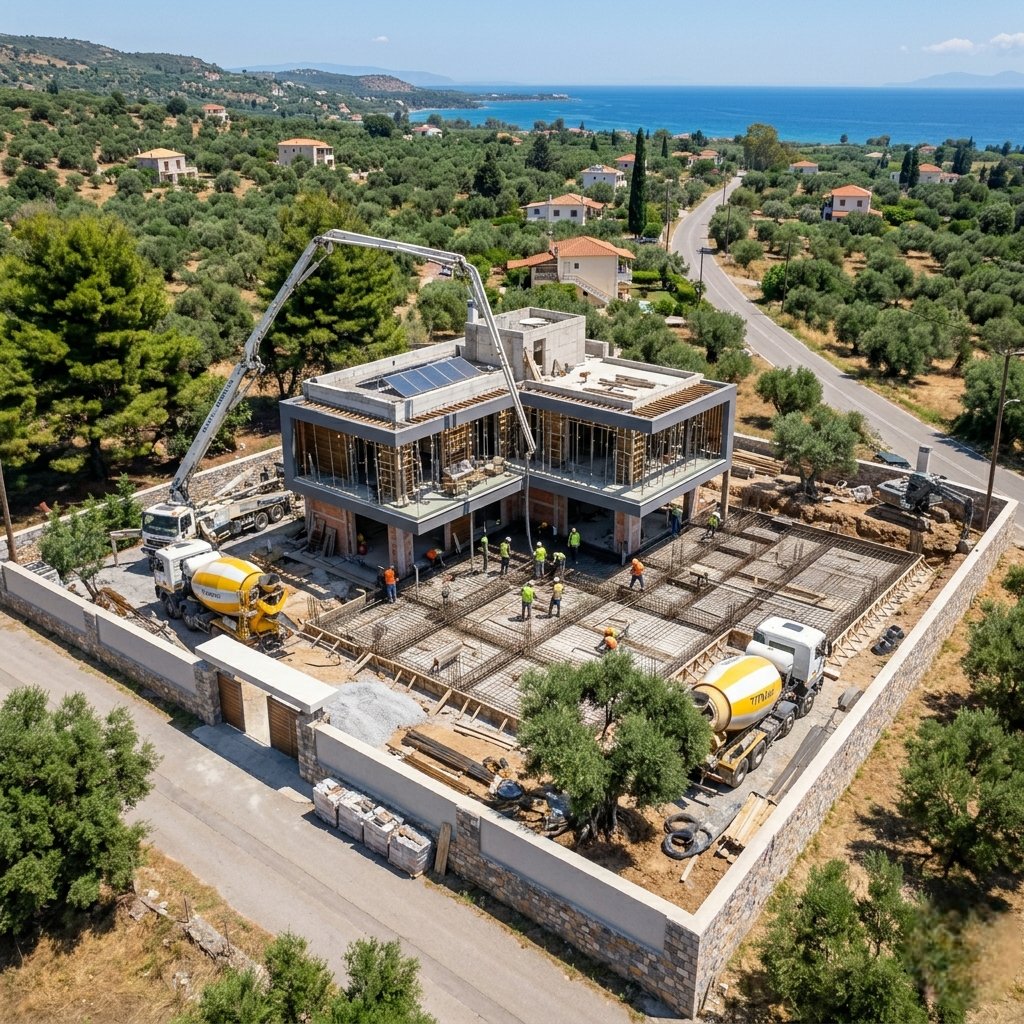
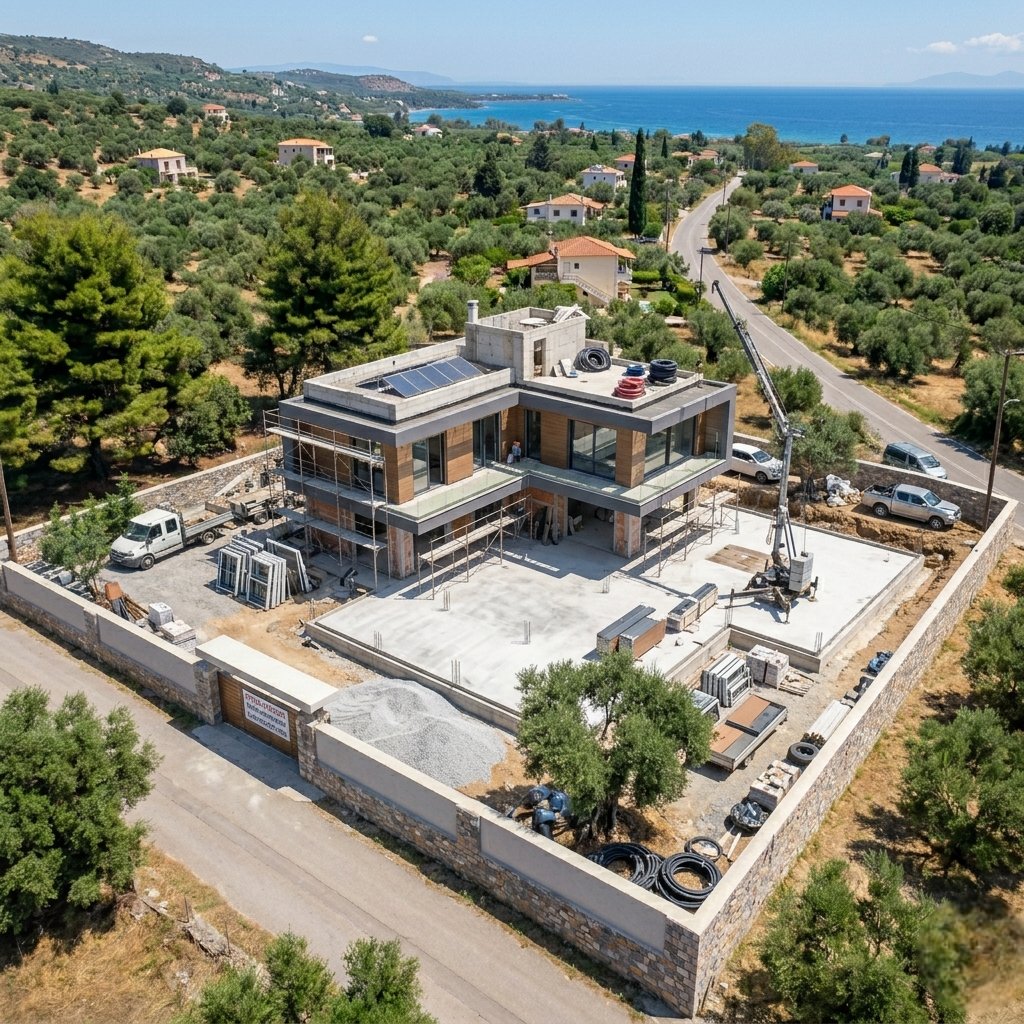
In this post we are going through a demo project that shows how Rabio can be used for construction budgeting through a realistic example: the full construction of a 150 sqm house, from early planning to final handover. The project has been built as a practical construction budgeting demo for the Rabio Demo environment, using a contractor-oriented cost structure and a full set of budget, actual cost, and earned value records.
Rabio as an open source budgeting software based on the Cost Breakdown Structure (CBS) approach, was designed to help teams organize, estimate, monitor, and control project costs in a structured way. In addition to the open source edition, Rabio also offers a PRO version with extended capabilities for professional use.
If you are searching for a clear example of construction cost management software, house construction budgeting, or Cost Breakdown Structure budgeting, this project is a strong reference case.
What Is Rabio?
Rabio is a budgeting software platform built around the logic of the Cost Breakdown Structure. Instead of storing project costs as disconnected records, Rabio organizes them into a structured hierarchy so users can understand:
- where money is planned
- where money is spent
- which parts of the project are progressing
- how budget and performance relate to each other
This approach is especially useful in construction, where cost control depends on clear links between:
- project phases
- work packages
- cost centers
- cost categories
- budget values
- actual costs
- earned value
Because Rabio is available as open source budgeting software, it offers flexibility for teams that want transparency and customization. At the same time, the Rabio PRO version is available for users who need more advanced features, professional support, and expanded operational use.
You can learn more at www.rabio.eu.
Why Use Rabio for Construction Budgeting?
Construction projects require more than a simple spreadsheet. A realistic building budget must connect:
- direct costs
- indirect costs
- labor
- materials
- subcontracting
- progress tracking
- cost performance
Rabio supports this through a Cost Breakdown Structure model that makes it easier to manage detailed budgets and compare them with actual execution.
For construction teams, this means better control over:
- estimates
- contractor budgets
- monthly cost tracking
- work package analysis
- earned value monitoring
- reporting and forecasting
That is why Rabio is well suited for construction budgeting, project cost control, and residential construction budget management.
About This Construction Budgeting Demo Project
This demo project was created to simulate the construction of a 150 square meter residential house. The scenario reflects a realistic contractor workflow and excludes land cost, focusing only on the building itself.
The building is modeled as a typical residential construction project with:
- reinforced concrete frame
- masonry walls
- roof slab waterproofing and insulation
- plastering and facade finishes
- aluminum windows and doors
- metal railings
- electrical installation
- plumbing and drainage
- HVAC and hot water systems
- flooring and wall tiling
- sanitary ware
- kitchen, wardrobes, and internal doors
- painting and decoration
- external works and handover
This makes the demo highly relevant for anyone looking for a house construction budget example inside a structured budgeting platform.
Cost Breakdown Structure in Rabio
One of the key strengths of Rabio is that it follows the logic of a Cost Breakdown Structure.
In this demo, the project is organized into several layers.
Cost Center Groups
At the highest level, the budget is grouped into areas such as:
- Direct Construction Cost
- Indirect Project Cost
- Contractor Overhead and Profit
- Contingency and Risk
- Total Cost
- Selling Price
This gives management-level visibility.
Cost Centers
Each major construction phase is then represented as a separate cost center, such as:
- Design Permits and Engineering
- Earthworks and Excavation
- Foundations and Substructure
- Reinforced Concrete Frame
- Masonry and Partitions
- Electrical Installation
- Plumbing and Drainage
- HVAC and Hot Water Systems
- Painting and Decoration
- External Works and Yard
This helps users analyze the project phase by phase.
Cost Categories
Each cost center is broken down further into cost categories, including:
- structural concrete
- reinforcement steel
- formwork
- waterproofing membranes
- electrical conduits
- water supply piping
- bathroom wall tiles
- sanitary fittings
- kitchen cabinets
- final builders clean
This level of detail is what makes Rabio useful for construction budgeting software and not just for generic accounting.
What the Demo Includes
This Rabio Demo project includes a full budgeting and control structure.
1. Construction Budget
A detailed construction budget was created using realistic 2022 assumptions for a 150 sqm house. The dataset includes:
- cost centers
- cost categories
- quantities
- unit costs
- total budget values
2. Actual Costs
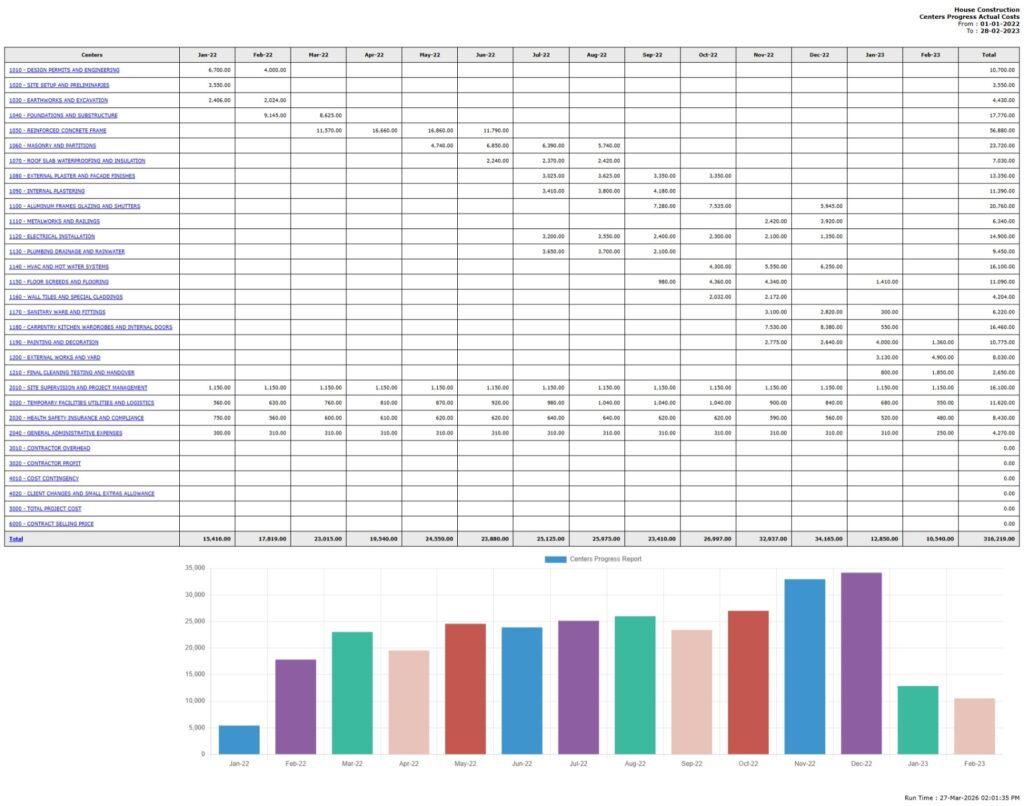
The project also includes monthly actual costs over a 14-month duration. This allows users to see how the financial execution of a residential project can be recorded inside Rabio.
3. Earned Value
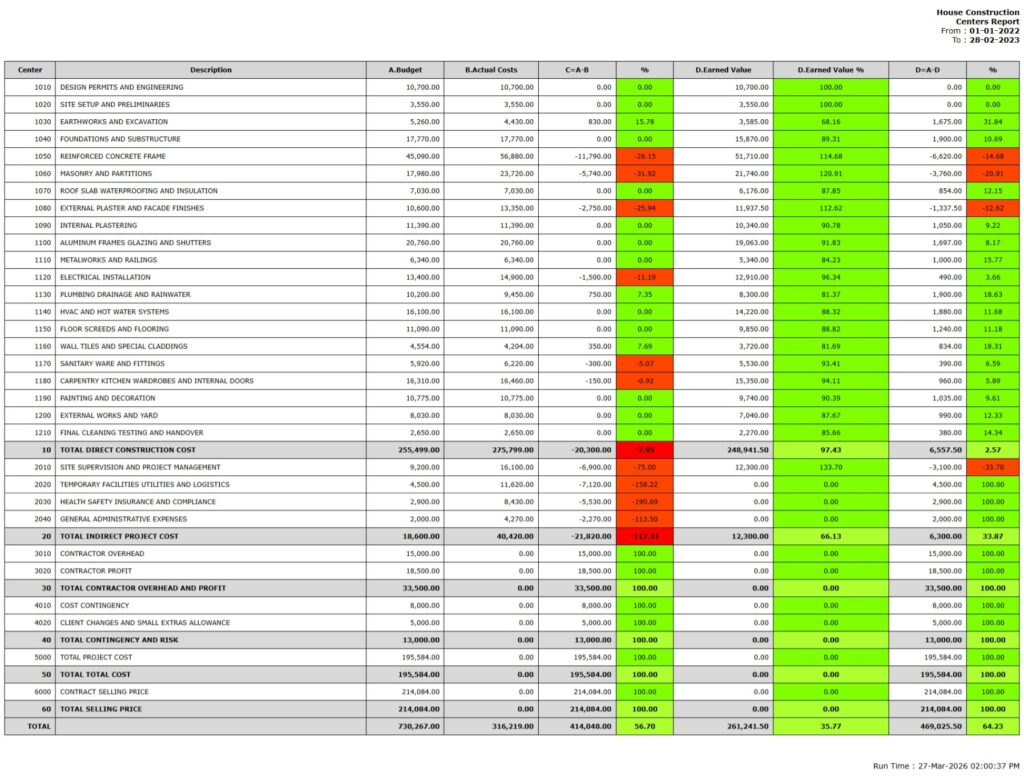
In addition, the demo includes earned value records by month, by cost center, and by cost category. This is especially valuable because it connects financial planning to actual progress on site.
Together, these three layers make the demo useful for both construction estimating and construction cost control.
Why Earned Value Is Important in Construction
Many tools can produce a budget. Fewer tools help you understand whether the project is truly performing well.
That is where earned value in construction becomes important.
By using earned value, Rabio users can compare:
- budgeted work
- actual costs
- real progress achieved
This helps identify problems such as:
- cost overruns
- low productivity
- delays in execution
- procurement inefficiencies
- mismatch between spending and progress
For a contractor or project manager, this is a major advantage. A house construction project may look active on paper, but if actual costs are increasing faster than earned value, the project may already be under pressure.
This makes Rabio a strong option for teams that want more than static budgeting. It supports a broader construction project cost management mindset.
Construction Demo Project Rabio Reports
Who Can Benefit from This Demo?
This demo is useful for many types of users, including:
- contractors
- civil engineers
- quantity surveyors
- construction estimators
- project managers
- developers
- consultants
- organizations evaluating open source budgeting software
It is also useful for users searching online for topics such as:
- open source budgeting software
- construction budgeting software
- construction budgeting demo
- cost breakdown structure software
- residential construction budget example
- house construction cost breakdown
- earned value construction example
- contractor cost control software
Because the demo is based on a realistic residential project, it is easy to understand and relevant for practical use.
Open Source Budgeting Software with a Professional Upgrade Path
A major advantage of Rabio is that it combines the accessibility of open source software with the availability of a PRO version.
This means users can start with the open source approach and structured CBS logic, while also having access to a professional path when they need:
- additional functionality
- business-grade deployment
- advanced reporting
- stronger operational support
- broader project management use cases
This combination makes Rabio attractive both for smaller teams and for organizations that want to scale their budgeting processes over time.
Why This Demo Matters for the Rabio Demo Environment
A demo project should do more than display sample numbers. It should show how the system works in a realistic scenario.
This construction budgeting demo does exactly that by demonstrating how Rabio handles:
- budget structure
- cost coding
- cost breakdown logic
- monthly execution data
- earned value tracking
- project completion analysis
In other words, it helps users understand not only what Rabio stores, but how Rabio supports real construction budgeting workflows.
A realistic demo construction project
This construction budgeting demo project for a 150 sqm house is a practical example of how Rabio, the open source budgeting software based on the Cost Breakdown Structure, can be applied to a real construction scenario.
By combining:
- structured cost breakdown
- detailed construction budget records
- monthly actual costs
- earned value monitoring
the demo shows how residential construction can be budgeted and controlled in a more professional and transparent way.
For contractors, engineers, estimators, and project managers, this is a valuable example of how to move from simple cost listing to true construction cost management.
Rabio is available as an open source budgeting software and also as a PRO version for professional use.
Rabio is free and open source
Try it now!